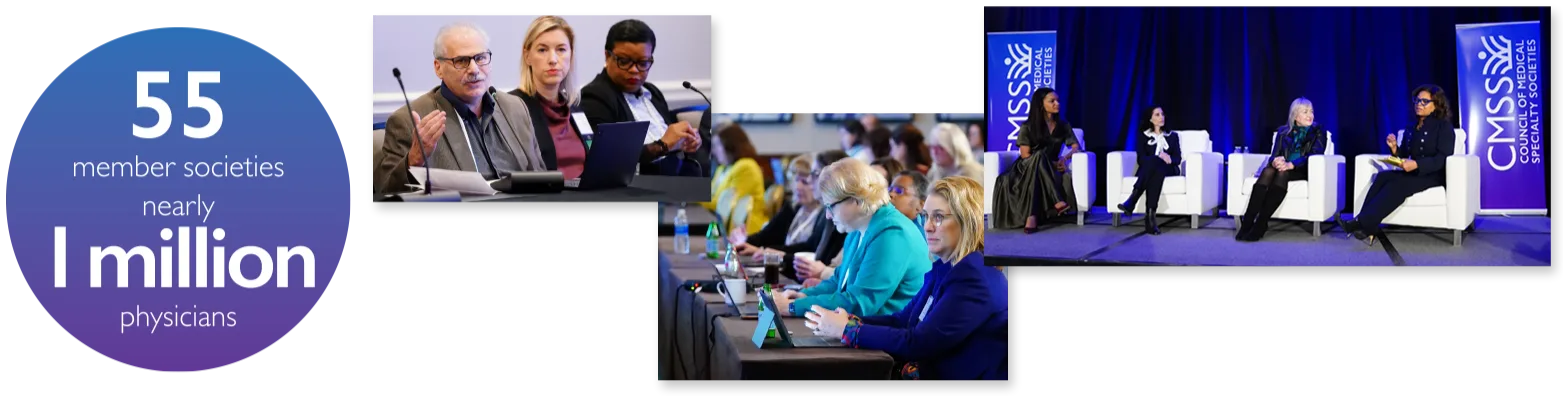
Since 1965, CMSS has worked to advance high-quality, evidence-based healthcare for all people. With the passage of Medicare and increasing medical specialization, CMSS recognized the opportunity to elevate the unique role of medical specialty societies in shaping and leading through the most critical issues in healthcare.
Sixty years later, with 55 specialty society members representing nearly
1 million physician members nationwide, our collective voice and impact are stronger than ever.

Emerging from History
The history of CMSS is inexorably linked to the history of patient care in America. In the wake of a national tragedy, Vice President Lyndon B. Johnson is elected President of the United States in 1964 by the largest popular vote in American history. Resolved to continue John F. Kennedy’s dream of vitalizing the nation, President Johnson introduces his “Great Society” agenda to the U.S. Congress.
That same year, he signs the Civil Rights Act, outlawing discrimination and prohibiting segregation. In 1965, he signs the Medicare and Medicaid Act, creating health insurance for millions of elderly people and those with limited income.

Together, these bold, new programs usher in an era of inclusivity and accessibility designed to keep all people and communities healthy—a throughline that continues to inform CMSS’ strategic priorities to this day.
Putting patients first
During the 1960s, the American Medical Association (AMA) advocates against Medicare and Medicaid. Countering this, three major medical societies pool their efforts to focus on what is best for patients.
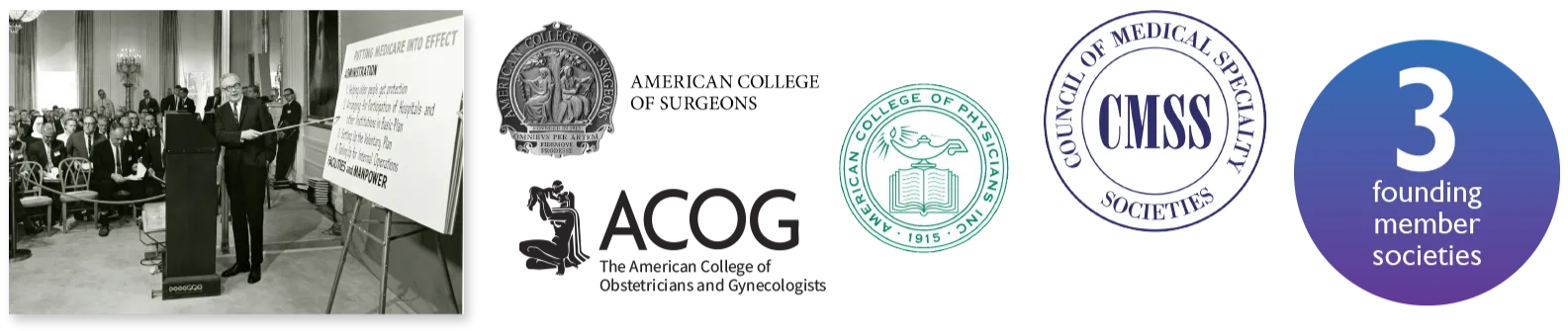
In 1965, the American College of Surgeons, the American College of Obstetricians and Gynecologists, and the American College of Physicians create the Tri-College Council to promote communication between specialty organizations, mutually advantageous solutions to problems, and medical education with a broader perspective on patient care. Gradually, other specialty societies are admitted, and in 1967, the Tri-College Council changes its name to the Council of Medical Specialty Societies (CMSS).
Sharing interestS and allies
The 1970s are a momentous decade for medical research. When the government seeks to extend its reach into graduate medical education, CMSS joins with representatives from the American Hospital Association (AHA), Association of American Medical Colleges (AAMC), and American Board of Medical Specialties (ABMS) to fend off federal control.
Meanwhile, in step with the Women’s Rights Movement, CMSS publishes an article in the 1975 ACS Bulletin drawing attention to prejudices against women in surgery and calling for the education and training of more women surgeons.
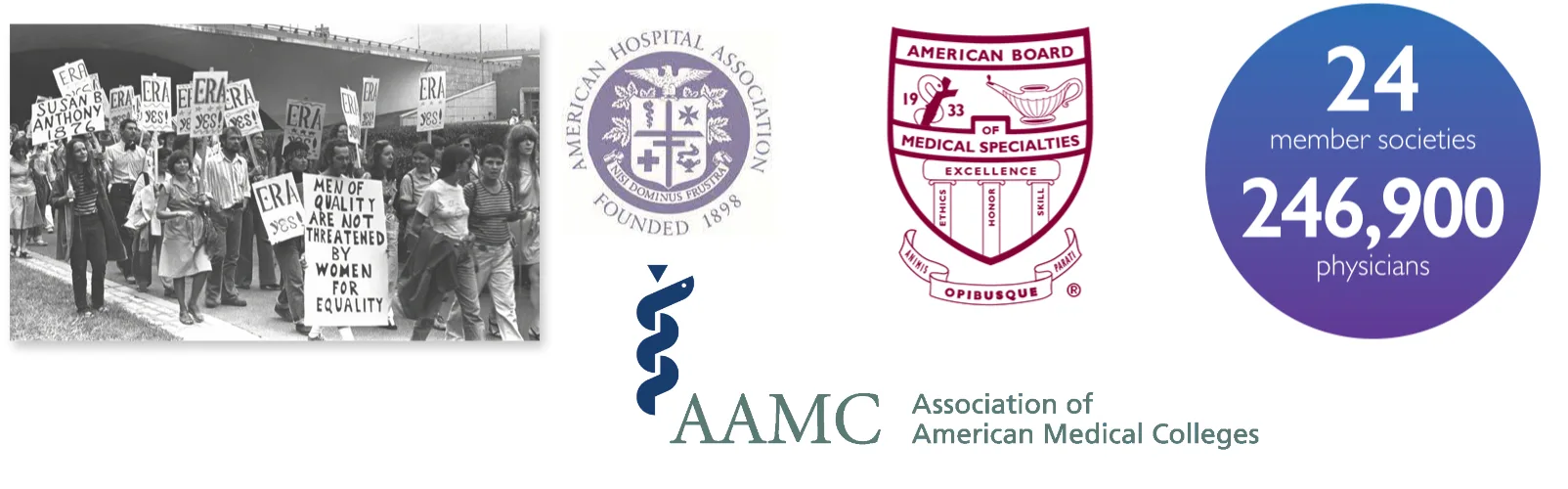
By the 1980s, CMSS is recognized as an influential convener and incubator, bringing medical specialty societies together to share common interests and viewpoints without surrendering their autonomy. In 1980, CMSS’ “Twelve Points of Agreement” help inform the formation of the Accreditation Council for Graduate Medical Education (ACGME). In 1981, CMSS assumes staffing and administrative responsibilities for the Accreditation Council for Continuing Medical Education (ACCME). Both the ACGME and ACCME, along with the ABMS (American Board of Medical Specialties) go on to formalize medical education and training across every specialty.
By 1982, CMSS membership encompasses all 24 primary specialties societies representing more than 246,900 physicians.
Leading Through Change
Throughout the 1990s, advancements in biomedical research, treatment of HIV/AIDS and cancer, healthcare reform, and ethics are primary topics at CMSS annual meetings. The rise of the internet and multimedia prompts exploration of new methods for continuing medical education.
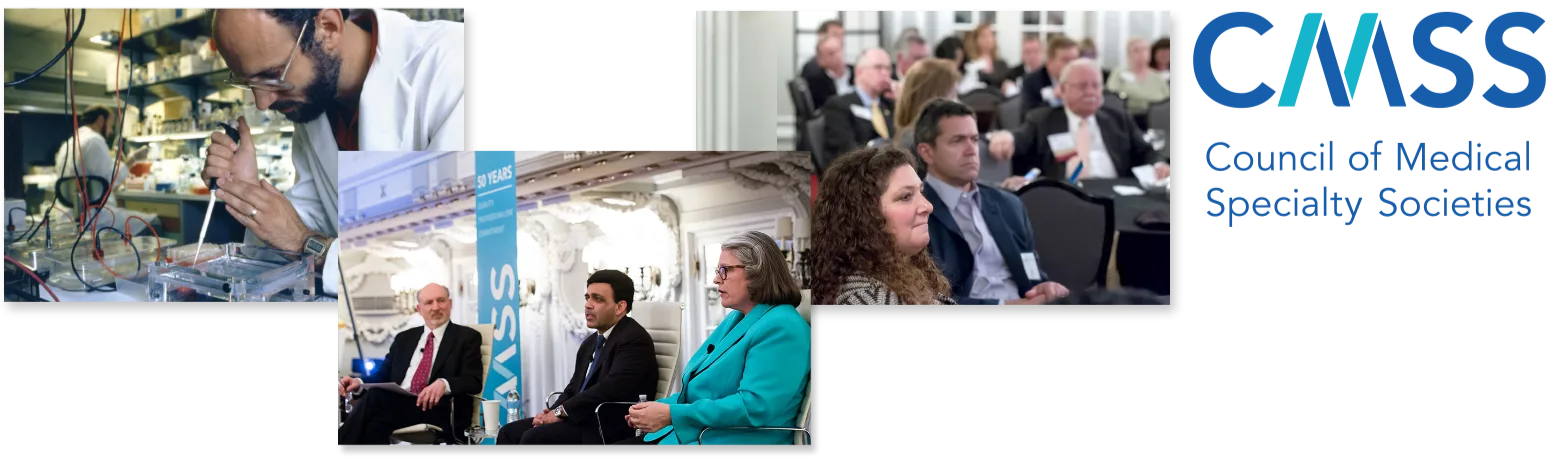
In 2008, CMSS hires its first full-time executive director, followed by an external management company to oversee the organization’s operations and rapidly growing membership. A new strategic plan focuses the organization on professionalism and quality. Because of its unique position, CMSS begins working with the ABMS and medical society certifying boards to determine best practices and CME requirements.
Informing transparency and quality
In 2010, passage of the “Sunshine Act” requires disclosure of financial relationships between health care providers and medical and pharmaceutical manufacturers.
CMSS develops its own “Code for Interactions with Companies” to support professional societies in meeting the highest ethical standards in their relationships with corporate partners. In 2011, CMSS membership expands to include 37 member societies representing 700,000 physicians across the United States.
By 2015, the Centers for Medicare and Medicaid Services is connecting physician payment with performance and patient satisfaction. Clinical data registries emerge as important resources for gathering and analyzing quality and patient outcomes.
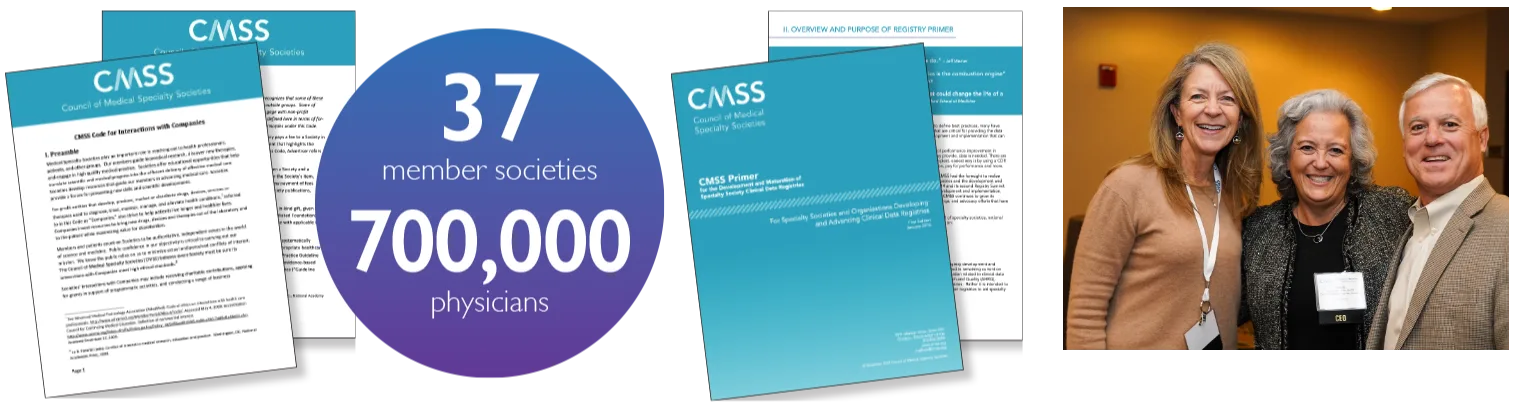
CMSS makes performance improvement a top strategic priority. In 2016, CMSS develops a “Primer for the Development and Maturation of Specialty Society Clinical Data Registries” to guide members on the proper design and use of clinical registries.
In 2018, CMSS hires its second full-time executive director, followed by five full-time professional staff. CMSS expands organizational membership eligibility, introduces a new CEO Council, and revitalizes its Professional Peer Groups to support knowledge sharing and leadership development across society staff.
Expanding community and reach
In 2020, the COVID-19 pandemic disrupts healthcare on a global scale. Over 450 members seeking to learn from each other gather for CMSS’ first online annual meeting.
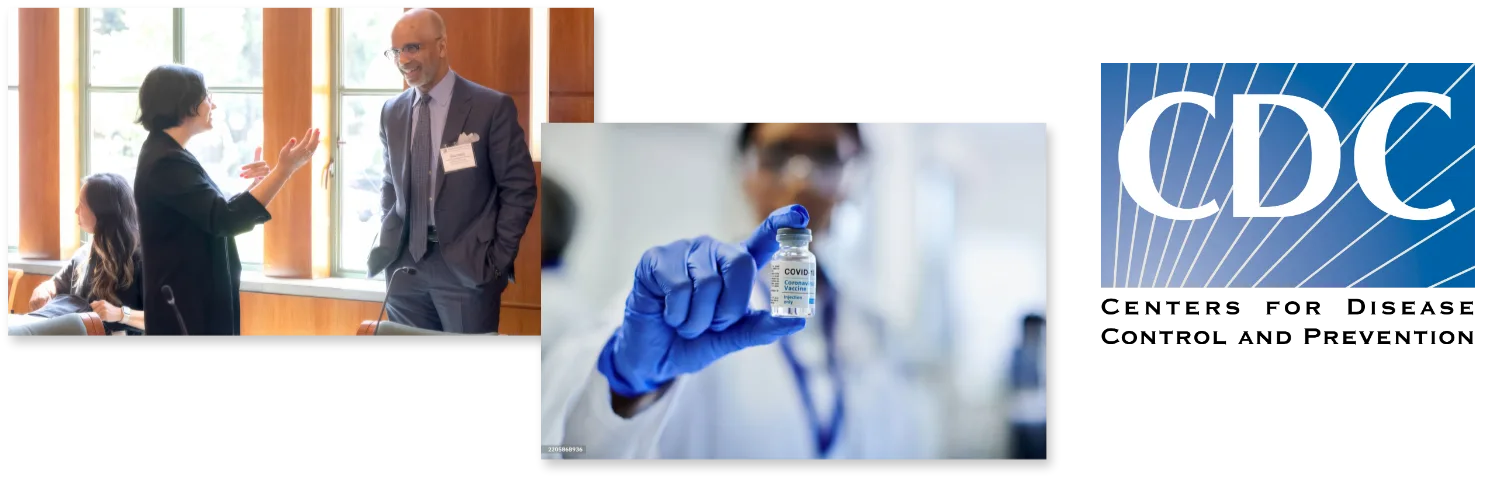
Not long after, CMSS is awarded a multi-million-dollar award from the Centers for Disease Control and Prevention to improve vaccination in high-risk adults. Through grants from private foundations, CMSS expands the breadth and depth of its programming to support diagnostic excellence and scholarship, clinical registries, health equity, and patient-centered research.
Refreshing our brand
In 2023, CMSS realigns its vision and mission through a new strategic plan focused on engaging community and building capacity, sharing learning and innovation, and addressing critical issues together. CMSS launches a new “GLEAM” program to train and prepare CEOs and physician leaders for transformative leadership and governance of medical societies. The creation of a new Encoding Equity Alliance leads to study of racial inequities in clinical algorithms. In partnership with allied organizations, CMSS combats misinformation by identifying and elevating credible sources of information, including informational health videos that appear in more than 60 countries.

Defending our mission
A major inflection point occurs in 2025: the priorities and personnel of public health and medical organizations are redirected, and long-term sustainability of science and research is at risk.
In June 2025, CMSS convenes a Workforce Summit to examine the state of the physician workforce across specialties and its impact on patient care. With 55 specialty society members representing more than 800,000 physicians nationwide, CMSS doubles down on a multitude of new and deleterious challenges, empowering medical specialty societies to innovate and lead with patients first, as resolutely as it did sixty years ago.